Are you using your trucking assets as efficiently as possible? Have you taken any steps to increase capacity utilization? Chances are that you answered “yes,” but your attempts to maximize fleet asset utilization continue to fall short of your expectations. And it’s not just your company suffering from inefficient asset utilization. As noted by Joseph Evangelist of Fleet Owner, asset utilization among carriers sat at an average of 50% in 2016. That means that half of all assets went unused, and it even included unused drivers. Obviously, that may not necessarily apply to much of 2020. However, the industry is always slow to adopt new software, so not much has changed among many carriers. The needs to improve fleet asset utilization and to maintain better control over trucking costs are absolute. And here are a few ways carriers can attain those goals.
1. Standardize how your company measures fleet asset utilization
Improving the transportation networks and enhancing fleet asset utilization can be challenging. Often it comes down to proper usage of innovative processes. Connecting shippers, carriers, customers, 3PLs, managers, and warehouse personnel is essential. Establishing and maintaining such connections allow applications to exchange information more effectively. And of course, it hinges on the ability to understand and maintain consistency in your metrics.
Stronger performance will always revolve around being productive and profitable. Staying focused on goal-oriented freight KPIs can go a long way to help. They become essential to improving asset utilization within the shipping supply chain. As a few examples, these are four critical KPIs to focus on:
- Owner-operator to driver ratio – A lower ratio here means more opportunities for in-house drivers who bring more affordable freight rates.
- Percentage of loaded miles – As the percentage of loaded miles increases, it correlates to better fleet asset utilization.
- Loads per truck per week – Knowing these ratios will help highlight potential missed load opportunities within the network.
- Percentage of brokerage revenue – Tracking profits and losses from 3PLs and brokers ensures better returns for a carrier.
2. Capture and analyze data inside and outside of your network to benchmark performance
The biggest barrier to efficiency in supply chain agility rests with an inability to see, capture or analyze freight data. Problems arise when companies cannot make improvements based on facts. And even worse, many organizations leave freight data on the table by not taking advantage of the massive external data source pools. There are numerous data providers in the world, but the question becomes, “what does an organization do with that data?”
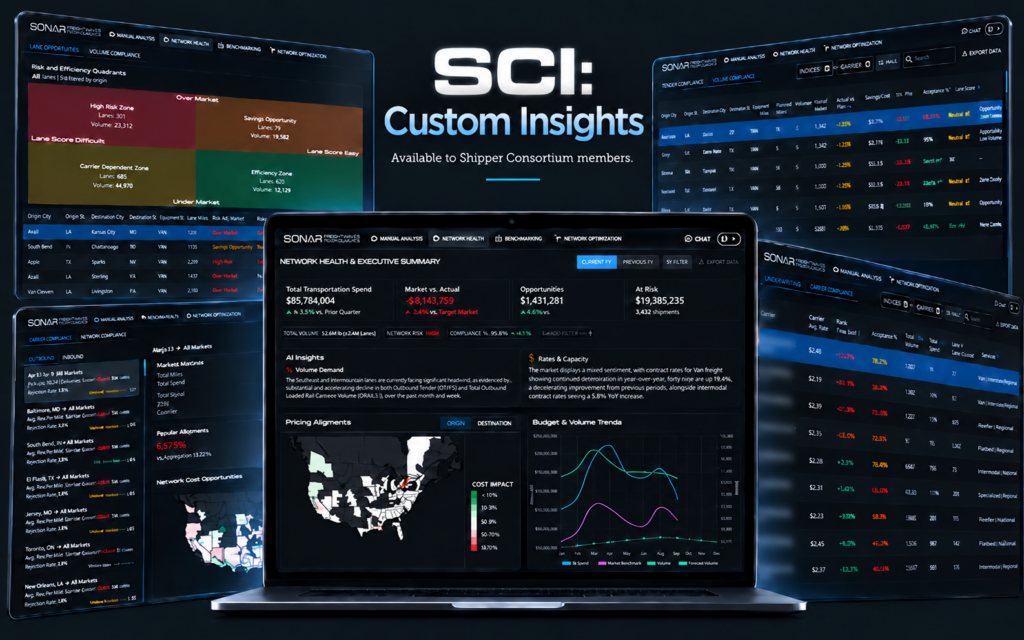
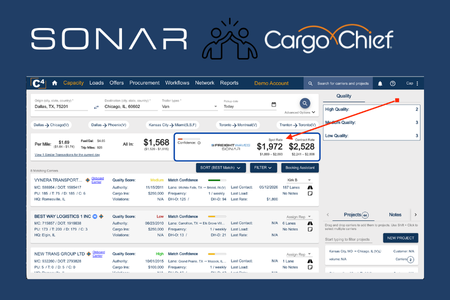
Obviously, it would involve building analytics platforms from scratch and spending countless resources. Instead, more carriers are letting experts in that specific realm handle the process. For instance, FreightWaves SONAR has already taken the steps to find the data correlations and apply the insights to create actionable graphics, indices and more.
Tracking that data is great, but it forgoes yet another opportunity to recognize missed opportunities for backhauls and boost equipment performance.
3. Avoid profit losses with fewer empty miles or shorter wait times
This step is among the easiest to recognize but difficult to put into action. After all, it’s not simply picking any load for a backhaul that adds the most value; it’s the ability to choose the best load that maximizes backhaul revenue.
Of course, profitability losses don’t simply involve an empty trailer. After all, losses could occur due to delays at the dock, extra wait times in ports, problems identifying road closures and more.
Moreover, the problems could be identifiable but housed within a dozen different systems. The better solution is to manage assets from a single source of real-time freight data – a single source of truth for making those critical decisions.
4. Move to a predictive equipment maintenance schedule
There’s another oft-forgotten way to improve asset utilization. Remember that any moves are riskier when maintenance is unstable. Thus, more companies are turning to predictive maintenance strategies to extend asset life expectancy, reduce the chance of breakdowns and increase throughput. Regardless of perception, it’s all part of the bigger picture of freight management analytics.
Boost fleet asset utilization with pricing and tendering data at your fingertips
When dealing with asset utilization, fleet managers have a lot to track. It is important for managers to maximize profits with every load. Effective fleet asset usage and tracking throughout the supply chain makes it easier to see strengths and weaknesses. Of course, it can be challenging to embrace automation and innovation, but it becomes critical for growth and survival in a digital age.
Start by following the steps outlined above to maximize fleet asset utilization. And continue by getting access to the freight data you need.
Request a FreightWaves SONAR demo now.