Over the past two years, all modes of transportation have been under immense pressure as freight rates have set new all-time highs. Freight demand continues to grow almost daily.
The annual RFP process has been increasingly difficult for shippers during this period, which has given rise to mini-bids, but understanding market dynamics and risks within your own network can ease the stress of the RFP management process.
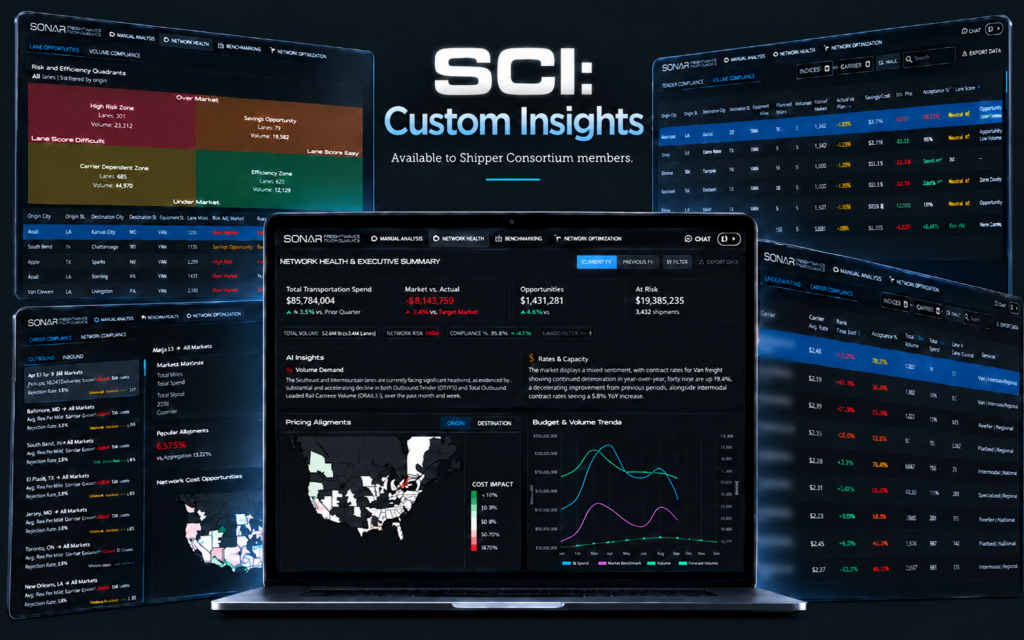
Shippers have a need to understand where the biggest cost management opportunities within their network lie. With FreightWaves Supply Chain Intelligence (SCI) platform, shippers are able to see exactly where they are overpaying and underpaying. Viewing where overpaying/underpaying risks are within their network allows for more targeted approaches during the RFP process and will likely lead to holding the line on budgets more effectively than using just historical data in the ever-evolving transportation environment.
With SONAR SCI, shippers can understand where the troubled lanes are that are placing the pressure on the budget and operations teams. They also can learn whether the problems are unique to their network or market-wide.
The combination of SONAR and SCI allows for shippers to take advantage of numerous datasets measuring volumes and capacity in particular markets as well as the desirability of entering destination markets.
With the ability to isolate unique challenges across the network, shippers can work with their carrier partners to enhance that relationship while maintaining a disciplined approach during the RFP process.
Knowing where and why specific lanes need additional funds allocated for transportation spend also will allow shippers to understand where the highest return opportunities lie.
If Shipper X below is overpaying on the largest lane and the lane is typically a relatively easy lane to manage, the potential savings on transportation could be significant.
Taking advantage of the highest return lanes, Shipper X may be able to save enough money to justify overpaying on the niche lanes to secure the necessary capacity.
Shipper X, while not being able to raise rates, has other operational steps that can drive improved compliance, including drop and hook opportunities, extending tender lead times and guaranteeing high and consistent volume levels.
Developing and reviewing RFPs is a tedious process with limited visibility into the whole market. However, with the implementation of FreightWaves’ SONAR and SCI platforms, shippers are able to have more targeted conversations with carrier partners about “trouble” lanes and drive the most value while also limiting the downside risk.