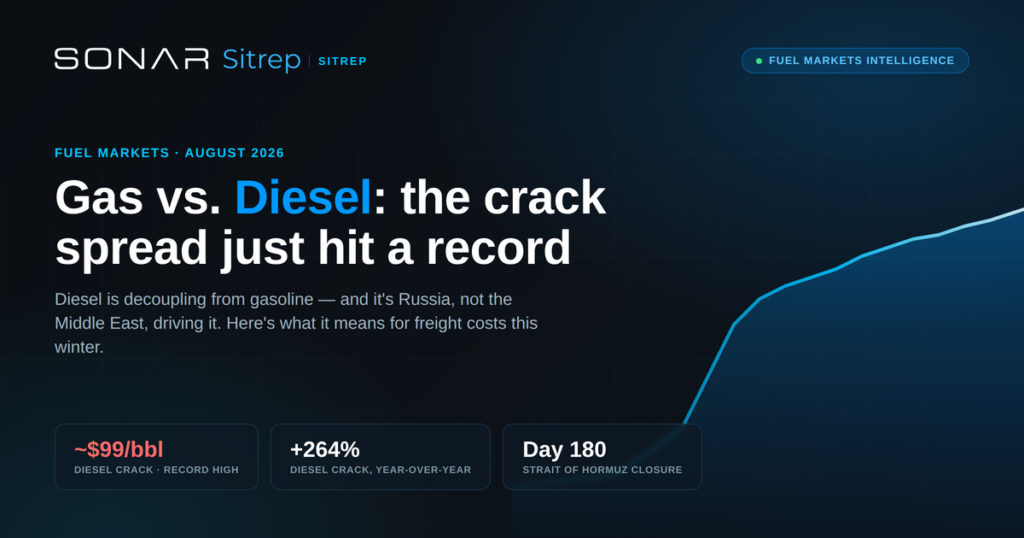
Diesel and gasoline prices normally move together. Not anymore. The diesel crack spread — the market’s measure of refiner margin on diesel — hit a record ~$99 per barrel in August 2026, more than triple where it sat a year ago. The gasoline crack, meanwhile, is sitting at a normal ~$44 per barrel. That gap is the widest it’s been in years, and it’s not because of a U.S. supply problem.
The short answer: Russia, not the Middle East, is driving it. Ukrainian drone strikes have knocked out an estimated 20–43% of Russian refining capacity, forcing Moscow to ban diesel exports outright in July 2026 and pulling a top-3 global diesel exporter’s barrels off the market. The Strait of Hormuz closure is real and adds a crude-side risk premium, but it’s a secondary factor — Hormuz mostly restricts crude oil and LNG, not finished diesel.
The numbers, at a glance
- Diesel crack: ~$92–$99/bbl, record territory, +264% year-over-year
- Gasoline crack: ~$44/bbl, a normal seasonal range
- Retail diesel (DTS.USA): $5.65/gal nationally, up 16.2¢ in the last 7 days
- California diesel: $7.04/gal — a ~$1.39/gal premium over the national average
- U.S. distillate inventories: ~14% below the five-year average
- Strait of Hormuz: effectively closed for 180 days, with continued disruptions
Why Russia matters more than the Middle East here
Russia was historically a top-3 global diesel exporter. Ukrainian drone strikes have hit more than 30 Russian refineries since 2024, and Ukraine’s General Staff claims 42.7% of the country’s refining capacity is currently out of action. Russian refinery runs fell to roughly 3.8 million barrels per day in June — a multi-decade low — and diesel/gasoil exports dropped from a steady ~950,000 barrels per day to around 580,000 before Moscow banned those exports outright in July, putting up to 36% of its total oil-product export volume at risk.
That’s a direct hit to the global supply of finished diesel — which is why the diesel crack, specifically, is the one setting records. The Strait of Hormuz closure adds a real risk premium to crude prices generally, but it doesn’t remove finished distillate barrels from the market the way Russia’s refinery damage does.
Why it matters for freight
Gasoline price swings are a consumer story. Diesel price swings are a freight-cost story — Class 8 trucks, locomotives, and marine vessels run almost exclusively on diesel, so a widening diesel crack shows up directly in fuel surcharges and carrier margins, even while pump gasoline prices stay calm. Most fuel surcharge schedules lag the wholesale price by one to two weeks, meaning carriers are absorbing part of this spike right now, before FSC programs catch up.
The setup heading into winter
Diesel and heating oil are functionally the same product — both are middle distillates from the same crude cut. Heating oil demand ramps sharply from October through March, right as the same already-tight distillate pool is supplying trucks, rail, and marine vessels. With U.S. distillate inventories already ~14% below average before winter demand begins, the setup favors the diesel crack widening further, not easing — regardless of what happens with Brent or WTI headline prices.
Track the diesel crack, the Strait of Hormuz crisis, and regional fuel prices live in SONAR.
Want the full sitrep — with the complete Russia/Hormuz breakdown, U.S. production and export data, and the freight-market data behind it? Subscribe to SONAR for the full report →
Frequently Asked Questions
Why is diesel more expensive than gasoline right now? Diesel is more expensive relative to crude oil because of a global distillate shortage, primarily caused by Ukrainian drone strikes knocking out a large share of Russian refining capacity. Russia banned diesel exports in July 2026, removing a major source of global diesel supply. Gasoline supply hasn’t been affected the same way, so gasoline prices have stayed in a normal range while diesel has spiked.
What is a crack spread? A crack spread is the price difference between crude oil and the refined products made from it, like gasoline and diesel. It’s quoted in dollars per barrel and represents a refiner’s gross margin. The standard U.S. benchmark is the 3-2-1 crack spread, which models 3 barrels of crude producing 2 barrels of gasoline and 1 barrel of diesel.
Is the Strait of Hormuz the main reason diesel prices are high? No. The Strait of Hormuz closure is a real contributor to elevated crude oil prices, but it primarily restricts crude oil and LNG shipments, not finished diesel. The bigger driver of the diesel-specific price spike is damage to Russian oil refineries, which has cut off a major source of global diesel exports.
Will diesel prices stay high through the winter? The setup favors continued or worsening pressure on diesel prices through the winter. Heating oil, which is chemically similar to diesel, competes for the same distillate supply, and heating demand rises sharply from October through March. With U.S. distillate inventories already below the five-year average, that seasonal demand increase is layering on top of an existing supply shortage.
How does the diesel crack spread affect trucking and freight costs? Diesel fuel powers nearly all Class 8 trucks, locomotives, and marine vessels, so a widening diesel crack spread directly raises the wholesale fuel costs carriers pay. Because fuel surcharge programs typically lag wholesale price changes by one to two weeks, carriers often absorb part of a sudden diesel price increase before surcharges catch up, compressing margins in the short term.