The freight market is always changing. Today’s “hot markets” could fall out of favor as quickly as they ascended. At the same time, any number of variables — from natural disasters to manufacturer relocations — could elevate a sleepy market to the big leagues. Seeing and understanding these shifts is critical for shippers planning their transportation strategies.
Tender data allows logistics leaders (think CPG, automotive, and food and beverage companies) to gauge raw market demand. Changes in inbound tender volumes indicate increased or decreased capacity in any given market. The inbound tender volume data housed in FreightWaves SONAR gives shippers an actionable, near-time view of these shifts.
At its core, tender data points to market dynamics. Understanding these dynamics is necessary for any company involved in moving freight. This data — available only in SONAR — allows companies to anticipate future freight movement, positioning them to respond instead of react.
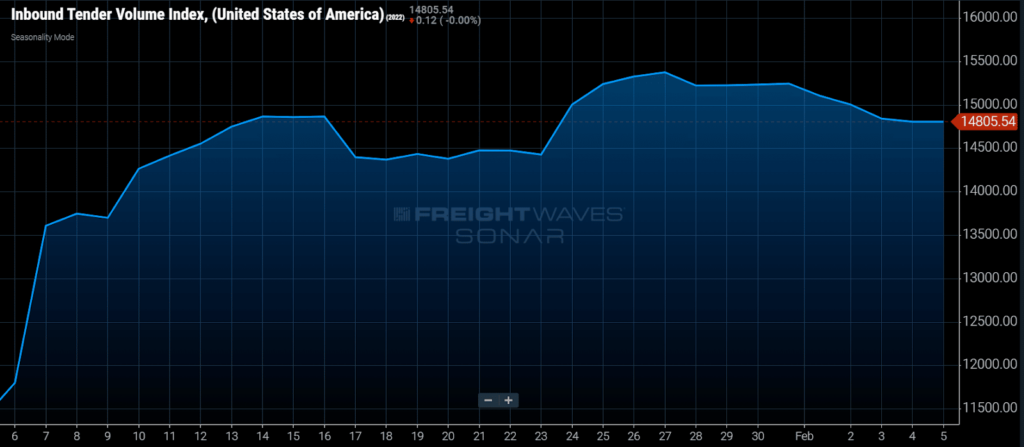
SONAR’s Inbound Tender Volume Index (ITVI) measures electronically tendered volumes based on destination markets across the country. Similar to the Outbound Tender Volume Index, this tool offers swift insights into freight market movements. While OTVI showcases the markets where freight is being loaded, ITVI gives users visibility into which markets are receiving the most freight.
Inbound tender volume data allows shippers to monitor capacity coming into their networks. By spotting changes in the number of inbound trucks early, companies can react to shifting market conditions in time to make sure their loads are covered. This speed helps shippers avoid delays and other distributions that ultimately lead to poor customer reviews.
Inbound tender volume data also offers a wealth of information for brokers. ITVI enables brokers to monitor the flow of freight across the nation, making it easier to single out target markets. This data also allows brokers to measure conditions across both their home and destination markets, helping with rate optimization.
ITVI can be broken down in a variety of ways — including national, regional and market-level granularities — to meet each user’s needs. It also can be coupled with other SONAR indices to create a more holistic picture of the market, guiding shippers and brokers alike to better, more informed decision making and route planning.
Ultimately, tender data allows shippers to access deeper and wider information about the freight markets, making them more prepared — and more competitive — regardless of shifting market conditions.
Want to know how you can use SONAR to optimize your freight movements?
Schedule a free consultation to see how SONAR can reduce your costs and performance risks.